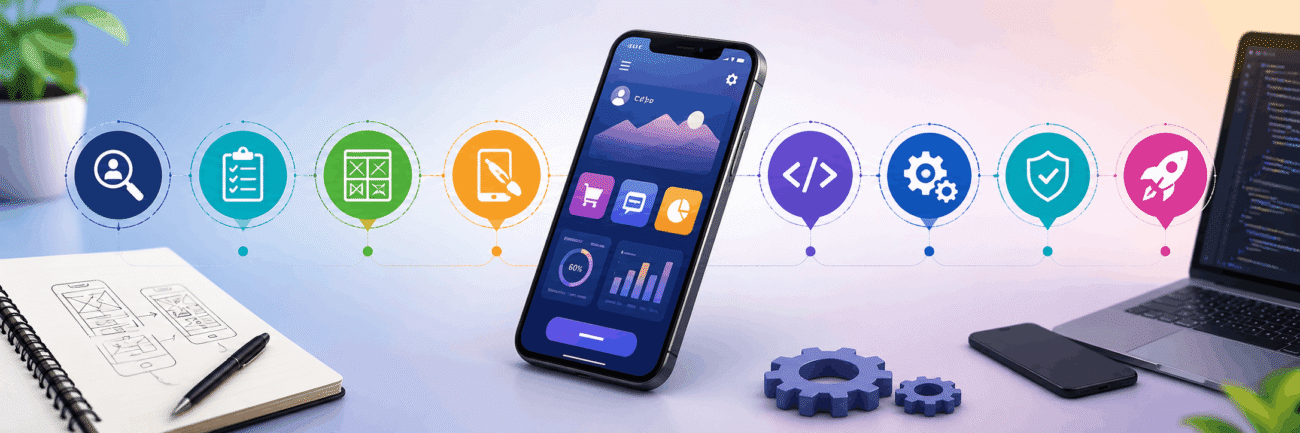


Mobile App Development Process Explained
The Mobile App Development Process Explained helps businesses understand how a mobile application moves from an idea to planning, design, development, testing, and launch. Whether it is a startup, retail store, healthcare provider, educational institution, or manufacturing company, having a well-planned mobile application can create better customer engagement and support long-term business growth. Businesses looking for a Mobile App Development Company in Coimbatore often want to understand the complete development process before investing in an application.
A successful mobile application is much more than attractive screens and features. It requires careful planning, market research, user-friendly design, quality development, thorough testing, and continuous improvements after launch. Understanding each stage helps businesses make informed decisions, reduce unnecessary costs, and achieve better results. This guide explains every step of the mobile app development process in simple language, making it easier for business owners and beginners to understand.
Why Understanding the Mobile App Development Process Matters
Many businesses assume that creating a mobile application simply involves writing code. In reality, every successful application follows a structured development process. A clear roadmap reduces confusion, improves communication between stakeholders, and minimizes costly mistakes.
For example, a retail business planning an online shopping app has different requirements than a healthcare provider offering appointment booking. Identifying these needs early allows developers to build features that truly solve customer problems. This is why working with a Mobile App Development Company in Coimbatore that follows a systematic process often results in better project outcomes.
Planning also helps businesses define their goals clearly. Instead of adding unnecessary features, companies can prioritize what delivers the most value to customers. This approach reduces development time while maintaining quality.
Businesses considering Enterprise Mobile App Development especially benefit from a structured approach because enterprise applications often involve multiple users, departments, integrations, and security requirements.
Step 1: Understanding Business Requirements
Every successful mobile application begins with understanding the business objective.
During this stage, developers gather information about:
- Business goals
- Target audience
- Customer challenges
- Competitor applications
- Expected features
- Budget considerations
- Project timeline
For instance, a restaurant may require online ordering and table reservations, while an educational institute may need student login, online classes, and attendance tracking.
Requirement gathering creates a strong foundation for the entire project and prevents misunderstandings later.
Step 2: Market Research and Competitor Analysis
Before development begins, researching the market helps identify customer expectations and industry trends.
Developers study:
- Existing mobile applications
- Popular features
- User reviews
- Customer pain points
- Industry standards
This research does not mean copying competitors. Instead, it helps identify opportunities to build a better user experience.
Businesses seeking Professional Mobile Application Developers in Coimbatore often value teams that spend time understanding both market trends and customer behavior before writing a single line of code.
Step 3: Planning the Application
Planning converts ideas into a structured project roadmap.
This phase includes:
- Feature prioritization
- User journey mapping
- Development milestones
- Technical architecture
- Resource allocation
Not every feature needs to be launched on day one. Many businesses begin with a Minimum Viable Product (MVP) that includes only essential functionality. Additional features can be introduced based on customer feedback after launch.
A well-planned application reduces delays and improves project efficiency.
Step 4: Mobile App UI/UX Design
An application should not only function well but also be easy to use.
This is where Mobile App UI/UX Design becomes one of the most important stages of development.
UI (User Interface) focuses on:
- Colors
- Buttons
- Typography
- Layout
- Visual consistency
UX (User Experience) focuses on:
- Easy navigation
- User flow
- Faster task completion
- Customer satisfaction
- Accessibility
For example, an e-commerce application should allow users to browse products, add items to the cart, and complete purchases with minimal effort.
Poor design often causes users to uninstall applications even if the underlying functionality is strong.
Step 5: Choosing the Right Technology
Businesses must decide whether to build:
- Android applications
- iOS applications
- Cross-platform applications
Modern businesses increasingly prefer Innovative Android and iOS Mobile App Development because it allows them to reach users across multiple platforms.
The technology selection depends on factors such as:
- Target audience
- Budget
- Required performance
- Device compatibility
- Future scalability
Selecting appropriate technologies early helps reduce future maintenance challenges.
Step 6: Mobile App Development
This is the stage where the actual coding begins.
Development is generally divided into two parts:
Frontend Development
Frontend development focuses on everything users see and interact with, including:
- Login screens
- Product pages
- Navigation
- Buttons
- Animations
- User interactions
Backend Development
Backend development handles:
- Database management
- User authentication
- APIs
- Notifications
- Security
- Business logic
A strong backend ensures smooth application performance even as the number of users grows.
Businesses investing in Enterprise Mobile App Development often require advanced backend systems capable of handling thousands of users securely.
Step 7: Testing the Mobile Application
Testing is a critical part of the development process.
Before launching, developers check:
- Functionality
- Performance
- Security
- Compatibility
- Usability
- Device responsiveness
Applications are tested on different:
- Screen sizes
- Android versions
- iPhones
- Tablets
- Internet speeds
Testing helps identify bugs before customers experience them.
Skipping this stage may result in crashes, poor reviews, and reduced customer trust.
Step 8: Launching the Application
Once testing is complete, the application is published.
Depending on the platform, developers prepare:
- Store listings
- Screenshots
- Icons
- Descriptions
- Privacy policies
- Required approvals
Launching an app is only the beginning.
After release, businesses monitor:
- Downloads
- User engagement
- Reviews
- Performance
- Crash reports
This information helps guide future improvements.
Step 9: Maintenance and Continuous Improvements
Every application requires ongoing maintenance.
Technology evolves continuously, and customer expectations change over time.
Regular updates may include:
- Security improvements
- Bug fixes
- Performance optimization
- New features
- OS compatibility updates
Businesses working with a reliable Mobile App Development Company in Coimbatore often benefit from long-term maintenance that keeps their applications secure and competitive.
Mobile App Development for Retail and E-commerce Businesses
Retail businesses increasingly rely on mobile applications to improve customer convenience.
A Mobile App Development Company in Coimbatore for Retail and E-commerce Businesses can help create applications that support:
- Product browsing
- Online payments
- Order tracking
- Customer accounts
- Loyalty programs
- Personalized recommendations
- Push notifications
These features simplify shopping while helping businesses build stronger customer relationships.
As online shopping continues to grow, investing in well-designed retail applications has become increasingly important.
Common Challenges During Mobile App Development
Every project comes with unique challenges.
Some common issues include:
Unclear Requirements
Changing project goals frequently can increase costs and delay completion.
Poor User Experience
Complicated navigation discourages users from continuing to use the application.
Ignoring Security
Applications handling personal information must prioritize data protection and secure authentication.
Lack of Testing
Insufficient testing increases the likelihood of customer complaints after launch.
No Maintenance Plan
Without regular updates, applications may become outdated or incompatible with newer devices.
Understanding these challenges early helps businesses prepare more effectively.
Practical Tips Before Starting a Mobile App Project
Before beginning development, businesses should consider the following recommendations:
- Clearly define your business goals.
- Identify your target users.
- Prioritize essential features first.
- Plan a realistic budget.
- Focus on user experience instead of unnecessary features.
- Think about future scalability.
- Allocate time for testing.
- Plan ongoing maintenance after launch.
Businesses that follow these practices generally experience smoother development and better long-term results.
For readers looking to explore this topic further, Mobile App Development Process Explained provides additional insights into planning, design, development, testing, and maintenance best practices.
Frequently Asked Questions
1. How long does mobile app development usually take?
The timeline depends on project complexity, required features, testing, and platform selection. Simple applications may take a few months, while enterprise applications generally require more time.
2. Why is Mobile App UI/UX Design important?
Good Mobile App UI/UX Design improves usability, increases customer satisfaction, reduces confusion, and encourages users to continue using the application.
3. What is Enterprise Mobile App Development?
Enterprise Mobile App Development focuses on creating secure and scalable applications for organizations. These apps often integrate with existing business systems and support multiple users.
4. Can one application support both Android and iOS?
Yes. Many businesses choose Innovative Android and iOS Mobile App Development using modern cross-platform technologies to reach users across both operating systems while reducing development effort.
5. Why is maintenance necessary after launching an app?
Maintenance helps fix bugs, improve security, add new features, maintain compatibility with operating system updates, and provide a better user experience over time.
Conclusion
Understanding the mobile app development process helps businesses make better technology decisions and reduces uncertainty during project execution. From gathering requirements and conducting research to designing interfaces, developing features, testing thoroughly, launching successfully, and maintaining the application, every stage contributes to long-term success.
Businesses should focus on creating applications that genuinely solve customer problems instead of simply following trends. Working with experienced professionals, setting realistic goals, and prioritizing user experience can significantly improve project outcomes.
With over 13+ Years of industry experience and the trust of 600+ Happy Clients, BMO SOFTWARE understands that successful mobile applications are built through careful planning, quality execution, and continuous improvement. By learning the complete development process, businesses can confidently make informed decisions and build applications that deliver lasting value.