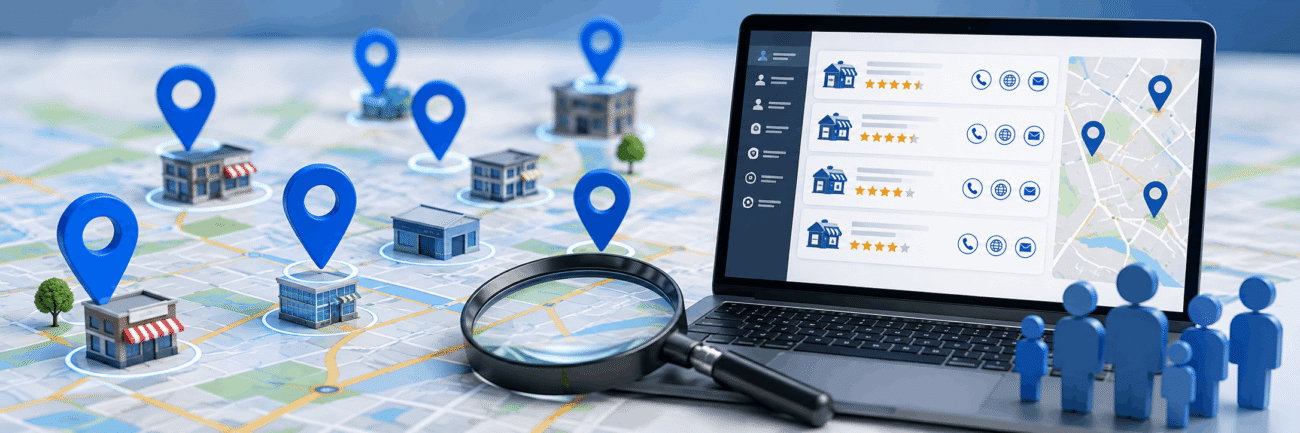


Generate B2B Leads Using Google Maps
For businesses in Coimbatore, Google Maps can be especially useful for finding local manufacturers, distributors, service providers, retailers, agencies, and other companies. When combined with a clear lead generation process, Business Data Scraping Software can reduce repetitive research work and help sales teams spend more time qualifying prospects and building relationships.
Why This Topic Matters
B2B lead generation is not simply about collecting a large number of business names. The real objective is to identify companies that may have a genuine need for your products or services.
For example, a company selling industrial equipment may want to find manufacturers in Coimbatore. A digital marketing agency may want to identify local restaurants, clinics, educational institutions, or retail businesses. A software company may search for businesses that could benefit from CRM, accounting, inventory, or customer management solutions.
Google Maps provides a practical starting point because businesses often maintain profiles containing information such as their business name, category, location, phone number, website, and operating details. Sales teams can use publicly available business information as part of their prospecting research.
Manual collection, however, can become time-consuming when hundreds or thousands of businesses need to be reviewed. This is where Automated Business Data Collection and Extraction can support a more organized workflow.
A typical process can include:
- Selecting a target industry.
- Choosing a target location.
- Searching relevant business categories.
- Collecting available business information.
- Removing duplicate or irrelevant records.
- Organizing the data into a spreadsheet or CRM.
- Reviewing and qualifying potential prospects.
- Beginning personalized outreach.
The important point is that extraction is only one part of lead generation. Data quality, relevance, verification, and responsible outreach are equally important.
How to Generate B2B Leads Using Google Maps
Google Maps can help businesses discover prospects according to specific geographic and business criteria.
Suppose a sales team wants to target textile manufacturers in Coimbatore. Instead of creating a prospect list from several unrelated sources, the team can search for relevant business categories and locations and then review the available information.
The same approach can be used for:
- Manufacturers
- Wholesalers
- Distributors
- Retailers
- Hotels
- Restaurants
- Educational institutions
- Healthcare businesses
- Real estate companies
- IT companies
- Logistics companies
- Professional service providers
The quality of the final lead list depends heavily on the search criteria. A broad search may produce a large database, but many records may not match the ideal customer profile.
A more focused search can produce fewer but more relevant prospects.
For example, instead of searching for "companies in Coimbatore," a business could define a more specific requirement such as "engineering manufacturers in Coimbatore" or "industrial suppliers near Coimbatore."
This makes the lead generation process more targeted.
Business Data Extraction for Automated Lead Generation
Businesses that regularly perform prospect research may benefit from Business Data Extraction Software in Coimbatore for Automated Lead Generation.
The main advantage is reducing repetitive manual work. Rather than copying business information individually, software can help collect and organize available data according to predefined requirements.
Depending on the solution, extracted records may include fields such as:
- Business name
- Business category
- Location
- Phone number
- Website
- Business profile information
- Available contact details
- Search-related information
The exact fields available can vary depending on the data source, software capabilities, and search criteria.
Once the information is collected, it can be cleaned and organized before being used by a sales or marketing team.
For example, a sales team may divide prospects into different categories such as "High Priority," "Needs Verification," and "Not Relevant." This creates a more practical workflow than treating every collected business as an equally valuable lead.
Businesses looking for a structured approach can also explore Generate B2B Leads Using Google Maps as part of their lead research strategy.
Role of Data Mining and Web Scraping Tools
Data Mining and Web Scraping Tools are commonly used to collect information from publicly accessible online sources and organize it for analysis.
Data mining focuses more on identifying useful patterns or information within large datasets. Web scraping generally refers to collecting information from websites or online pages in a structured manner.
In B2B lead generation, these technologies can support several activities.
For example, a company may collect business records based on industry and location, clean the dataset, identify duplicates, and then compare the results with its existing customer database.
However, automation does not automatically make data accurate. Business information can change over time. Phone numbers may become inactive, websites may change, and companies may move locations.
Therefore, extracted information should be reviewed and updated regularly.
Benefits of B2B Leads Using Google Maps
Saves Research Time
Manual prospect research requires employees to search, copy, paste, organize, and verify information repeatedly.
Automation can reduce some of these repetitive activities. This allows sales professionals to focus more on lead qualification, communication, and relationship building.
Creates Structured Lead Lists
A properly organized dataset is easier to filter and analyze.
For example, sales teams can separate prospects based on location, industry, business category, or other available fields. Structured information also makes it easier to transfer qualified leads into CRM systems.
Supports Local Lead Generation
Businesses often need prospects from specific cities or regions.
For a company targeting Coimbatore, collecting relevant local business information can help create a geographically focused prospect database.
The same approach can be adapted for different cities, regions, or business categories depending on the company's sales strategy.
Reduces Repetitive Manual Work
Employees can spend significant time performing the same search activities every day.
Automated workflows can handle repetitive collection tasks more efficiently, although human review is still important for checking relevance and accuracy.
Helps Scale Prospect Research
A manual process may work when a business needs a small list of prospects. As the requirement grows, managing large datasets becomes more difficult.
Automation can make it easier to handle larger volumes of business information while maintaining a consistent collection process.
One advantage of B2B Leads Using Google Maps is that businesses can focus their prospecting on specific industries and locations.
Common Mistakes Businesses Make
Collecting Data Without Defining the Target Customer
One common mistake is collecting as many businesses as possible without first deciding which companies are actually relevant.
A better approach is to define the ideal customer profile before starting research.
Consider factors such as industry, location, company type, business size, and potential business requirements.
Depending Completely on Extracted Data
Extracted information should not automatically be treated as verified sales leads.
Businesses can close, relocate, change phone numbers, update websites, or modify their services.
Before outreach, important information should be reviewed whenever possible.
Ignoring Duplicate Records
Large datasets often contain duplicate businesses.
Duplicate records can waste sales time and create confusing reports. Data cleaning should therefore be part of the lead generation workflow.
Using the Same Message for Every Prospect
A large lead list does not mean every business should receive an identical message.
A manufacturer and a digital agency may have completely different requirements.
Personalized outreach based on the prospect's industry and business needs is generally more useful than sending the same generic message to everyone.
Ignoring Data Privacy and Platform Rules
Businesses should collect and use information responsibly. They should consider applicable privacy requirements, platform terms, and relevant communication regulations before using extracted information for marketing or outreach.
Automation should support responsible prospecting rather than replace good judgment.
Expert Tips Before Building a Google Maps Lead Generation Process
Define Your Ideal Customer
Start with a clear description of the businesses you want to reach.
For example:
- Industry: Manufacturing
- Location: Coimbatore
- Business type: B2B
- Preferred company size: Small to medium businesses
- Requirement: Potential need for business software
This makes the search process more focused.
Create a Consistent Data Format
Before collecting business information, decide which details your sales team actually needs. Keeping the same format for every prospect makes the database easier to manage, filter, and review.
For example, each lead can include the Business Name to identify the company, Business Category to understand its industry, and Location to support regional targeting. Contact information such as a phone number and website can help the sales team research and connect with potential prospects.
You can also maintain a Lead Status such as New, Contacted, Qualified, or Follow-up Required. Adding a short Notes section allows sales representatives to record important details about each prospect.
A consistent data structure makes it easier to organize leads and transfer qualified prospects into CRM or sales management systems.
Clean the Data Before Outreach
Remove duplicate and irrelevant businesses before sharing the list with the sales team. Check important information whenever possible and identify incomplete records.
Clean data helps sales teams avoid wasting time on duplicate prospects or businesses that do not match their target customer profile.
Connect Lead Research With CRM
Lead extraction becomes more useful when it is connected to the complete sales process. Qualified prospects can be added to a CRM, where sales teams can record calls, emails, follow-ups, meetings, and lead status.
This creates a smoother workflow from discovering a prospect to converting that prospect into a potential customer.
Measure Lead Quality
Do not measure success only by the number of businesses collected. A large database does not always mean better lead generation.
Instead, consider how many prospects match your target customer profile, how many contact details are usable, how many prospects respond, and how many eventually become qualified opportunities.
You can also identify which industries or locations generate better results. This information can help improve future Automated Business Data Collection and Extraction campaigns and make your lead generation process more focused.
Clean the Data Before Outreach
Remove duplicates and irrelevant businesses before transferring leads to the sales team.
Where possible, verify important information and identify incomplete records.
Connect Lead Research With CRM
Lead extraction becomes more useful when it fits into the complete sales process.
Qualified prospects can be added to a CRM where sales teams can record calls, emails, follow-ups, meetings, and lead status.
This creates continuity between prospect discovery and sales management.
Measure Lead Quality
Do not measure success only by the number of businesses collected.
Better questions include:
- How many prospects match the target customer profile?
- How many contact details are usable?
- How many prospects respond?
- How many become qualified opportunities?
- Which industries generate the best results?
These measurements help businesses improve their lead generation strategy over time.
Top Business Data Extraction Tools in Coimbatore: What to Consider
When evaluating the Top Business Data Extraction Tools in Coimbatore, businesses should focus on practical requirements rather than choosing software based only on the number of features.
Important considerations include ease of use, available data fields, export options, filtering capabilities, data organization, scalability, support, and compatibility with existing sales workflows.
It is also useful to understand whether the software is designed for occasional research or regular business prospecting.
The right solution should fit the company's actual workflow. A small business with a limited prospecting requirement may need a simple solution, while a larger sales team may require advanced filtering, automation, data management, and CRM integration.
Frequently Asked Questions
1. Can Google Maps be used for B2B lead generation?
Yes. Businesses can use Google Maps as a source for discovering potential companies based on location, category, and other publicly available business information. The collected information should be reviewed and qualified before being treated as a sales lead.
2. What is business data extraction software?
Business data extraction software helps collect and organize business information from online sources. Depending on the software, users may be able to filter information based on location, business category, and other criteria.
3. How does automated lead generation save time?
Automation can reduce repetitive tasks such as searching for businesses, collecting available information, organizing records, and preparing datasets. This allows sales teams to spend more time on qualification and customer communication.
4. Is extracted business data always accurate?
No. Business information can change frequently. Companies may update phone numbers, websites, addresses, or services. Data should therefore be cleaned and verified before important sales or marketing activities.
5. What should businesses check before using a data extraction tool?
Businesses should review the software's features, data quality, export options, scalability, support, security, and suitability for their workflow. They should also consider applicable privacy requirements and the terms governing the data sources they use.
Conclusion
A structured approach to B2B Leads Using Google Maps can make business prospect research more organized and efficient.
Google Maps can be a useful starting point for businesses looking to identify B2B prospects by industry and location. When combined with a structured sales process, Business Data Extraction Software in Coimbatore can help reduce repetitive research and organize publicly available business information more efficiently.
The strongest results do not come from simply collecting a large number of records. They come from identifying the right prospects, maintaining clean data, verifying important information, and following up with relevant communication.
Tools such as Business Data Scraping Software, Data Mining and Web Scraping Tools, and Automated Business Data Collection and Extraction can support this process when used responsibly.
BMO SOFTWARE brings more than 13 years of industry experience and has worked with 600+ happy clients. For businesses exploring automated data collection, the focus should remain on choosing a practical solution, maintaining data quality, and building a lead generation process that supports long-term sales growth.